Most beginner investors in Australia lose money not because they picked bad stocks, but because they paid too much in fees, bought hype, or didn’t understand the tax rules. I’ve been there. My first trade was $2,000 in a penny stock called “Next Horizon” because a forum said it would triple. It didn’t. After that, I spent a year reading every PDS and product statement I could find. Here’s what actually works.
The Only Account You Need (and the One You Should Skip)
Before you buy a single share, you need a brokerage account. In Australia, you have three main options: a full-service broker, a discount online broker, or a “neobroker” app. Skip the full-service brokers unless you have $250,000+ to invest. They charge $100+ per trade and offer advice that often benefits their commission more than your portfolio.
CommSec is the biggest online broker in Australia. Trades cost $10–$15 per transaction. The platform is solid, but the interface feels dated. For a beginner buying $500–$1,000 parcels, those fees eat 1–3% of your money each time. That’s painful.
SelfWealth charges a flat $9.50 per trade. No monthly fees. No inactivity fees. It’s what I use for most of my ASX trades. The interface is clean, and they offer a portfolio analytics tool that shows your diversification at a glance.
Stake is cheaper again at $3 per trade for ASX stocks and $0 for US stocks (with a spread). If you’re investing small amounts regularly, Stake wins. The catch: their FX spread on US trades is about 0.6%, so if you’re buying US ETFs, you’re paying a hidden fee.
For a beginner investing $200–$500 per month, I recommend SelfWealth or Stake. CommSec only makes sense if you already have a Commonwealth Bank account and want everything in one place.
Index Funds vs Individual Stocks: The Real Difference
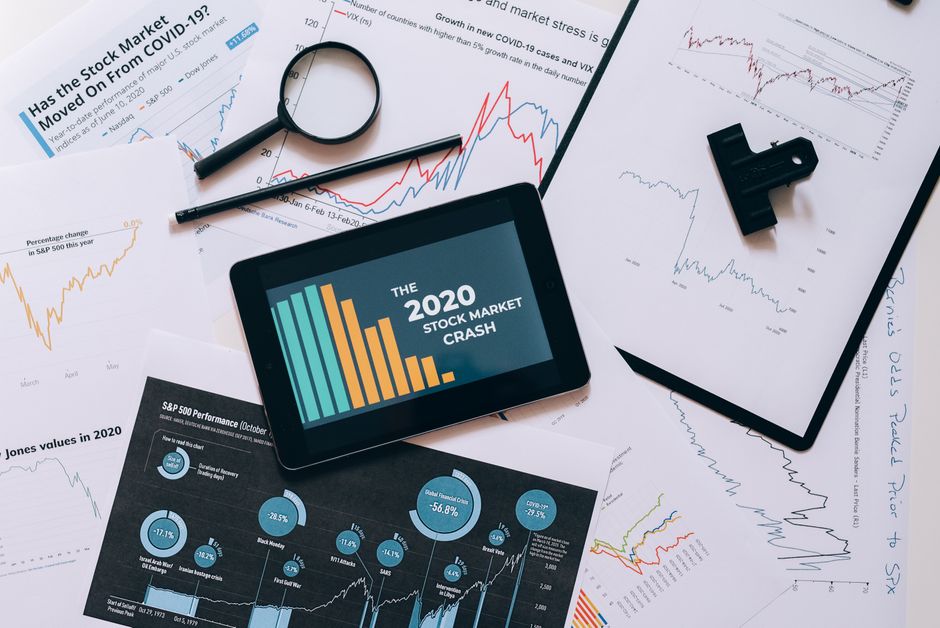
Here’s the uncomfortable truth: 85% of professional fund managers in Australia fail to beat the ASX 200 index over 10 years. If professionals can’t do it, you probably can’t either. That’s not an insult — it’s math.
An index fund tracks a market index. The Vanguard Australian Shares Index ETF (VAS) tracks the ASX 300. It costs 0.07% per year. Over 30 years with $10,000 initial and $500 monthly contributions, that fee costs you about $4,500 in lost growth. Compare that to an actively managed fund charging 1.2% — that same scenario costs you $52,000 in fees.
Individual stocks are different. If you buy Commonwealth Bank (CBA) shares, you’re betting on one company’s performance. If CBA’s profits drop 20%, your investment drops 20%. If the whole banking sector struggles, you lose. With VAS, if CBA drops 20%, it only affects 8% of your portfolio because the fund holds 300 companies.
I own both. 80% of my portfolio is in index funds (VAS and iShares Core S&P 500 ETF (IVV)). The other 20% is individual stocks I research heavily — CSL Limited and Wesfarmers. But I didn’t touch individual stocks until I had $20,000 in index funds first.
The Tax Trap That Costs Beginners Thousands
Most Australian beginners don’t think about tax until they get a letter from the ATO. Then they learn the hard way. Here are the three tax mistakes I see most often.
Mistake 1: Selling within 12 months. If you hold a share for less than 12 months and sell at a profit, the entire gain is added to your income and taxed at your marginal rate. That could be 32.5%, 37%, or 45%. Hold for more than 12 months, and you get a 50% capital gains discount. You only pay tax on half the gain. That’s the difference between paying $1,000 in tax vs $500 on a $2,000 profit.
Mistake 2: Ignoring dividend franking. Australian companies pay dividends with franking credits attached. Those credits represent tax the company already paid. When you lodge your tax return, you get those credits back as a refund or offset against your tax bill. If you’re earning under $45,000, you can get cash back from the ATO. I’ve seen beginners throw away $300–$800 per year by not claiming franking credits.
Mistake 3: Trading too frequently. Every trade is a taxable event. If you buy and sell 20 times in a year, you have 20 transactions to report. The ATO requires you to calculate the cost base for each one. Do this wrong, and you’ll either overpay tax or get audited. I use Sharesight to track my trades automatically. It costs $0 for the basic plan if you have under 10 holdings.
One more thing: superannuation. Your super fund is already investing for you. The standard MySuper option in most industry funds (like AustralianSuper or Hostplus) invests in a diversified mix of shares, bonds, and property. The average return over the last 10 years is about 8% per year. Before you start an investment account outside super, check what your super is doing. If it’s already invested in growth assets, you might not need to duplicate that.
Three Mistakes That Wipe Out Your Gains
I’ve made all three. Here’s how to avoid them.
1. Chasing last year’s winners. In 2026, Afterpay (now Block) was the hottest stock on the ASX. It returned 300% in 12 months. Everyone who bought in 2026 was rich. Everyone who bought in February 2026 at $160 watched it fall to $50 by 2026. The stocks that went up the most last year are rarely the best performers next year. Buy diversified funds instead.
2. Ignoring the brokerage fee. If you invest $200 per month and pay $10 per trade, that’s 5% gone before you start. The market returns 8–10% per year on average. You just gave away half your first year’s return in fees. Solution: use Stake ($3 trades) or batch your purchases. Invest $600 every three months instead of $200 monthly. That saves you $20 per year in fees.
3. Panic selling during a drop. In March 2026, the ASX 200 fell 30% in one month. I watched my portfolio drop from $15,000 to $10,500. I didn’t sell. By June 2026, it was back to $17,000. If I had sold at the bottom, I would have locked in a $4,500 loss. The market recovers. It always has. The people who lose money are the ones who sell when they’re scared and buy when they’re greedy.
Comparison: Best Low-Cost ETFs for Australian Beginners
Here’s a table of the ETFs I recommend for most beginners. All are listed on the ASX, all have low fees, and all are diversified.
| ETF | What It Tracks | Fee (p.a.) | Minimum Investment | Best For |
|---|---|---|---|---|
| VAS (Vanguard Australian Shares Index ETF) | ASX 300 — top 300 Australian companies | 0.07% | ~$90 (1 share) | Australian market exposure |
| IVV (iShares Core S&P 500 ETF) | S&P 500 — top 500 US companies | 0.04% | ~$60 (1 share) | US market exposure |
| VGS (Vanguard MSCI Index International Shares ETF) | Large and mid-cap companies in developed markets (ex-Australia) | 0.18% | ~$100 (1 share) | Global diversification |
| DHHF (BetaShares Diversified All Growth ETF) | One fund that holds other ETFs — Australian, US, global, emerging markets | 0.19% | ~$35 (1 share) | “Set and forget” — single fund covers everything |
| A200 (BetaShares Australia 200 ETF) | ASX 200 — top 200 Australian companies | 0.04% | ~$30 (1 share) | Cheapest Australian exposure |
My pick for a beginner with $1,000 to start: buy 5 shares of DHHF ($175) and 10 shares of A200 ($300). That gives you instant diversification across Australia and the world for about $475. Keep the rest as cash until you have another $500 to invest. Then repeat.
If you have less than $500 to start, buy 1 share of DHHF ($35) and 1 share of A200 ($30). That’s $65. Add $50–$100 per month and buy more shares when you have enough to make the brokerage fee worth it.
Disclaimer: The information on this page is for educational purposes only and does not constitute financial advice. Rates, terms, and eligibility requirements are subject to change. Always compare multiple lenders and consult a licensed financial advisor before borrowing.